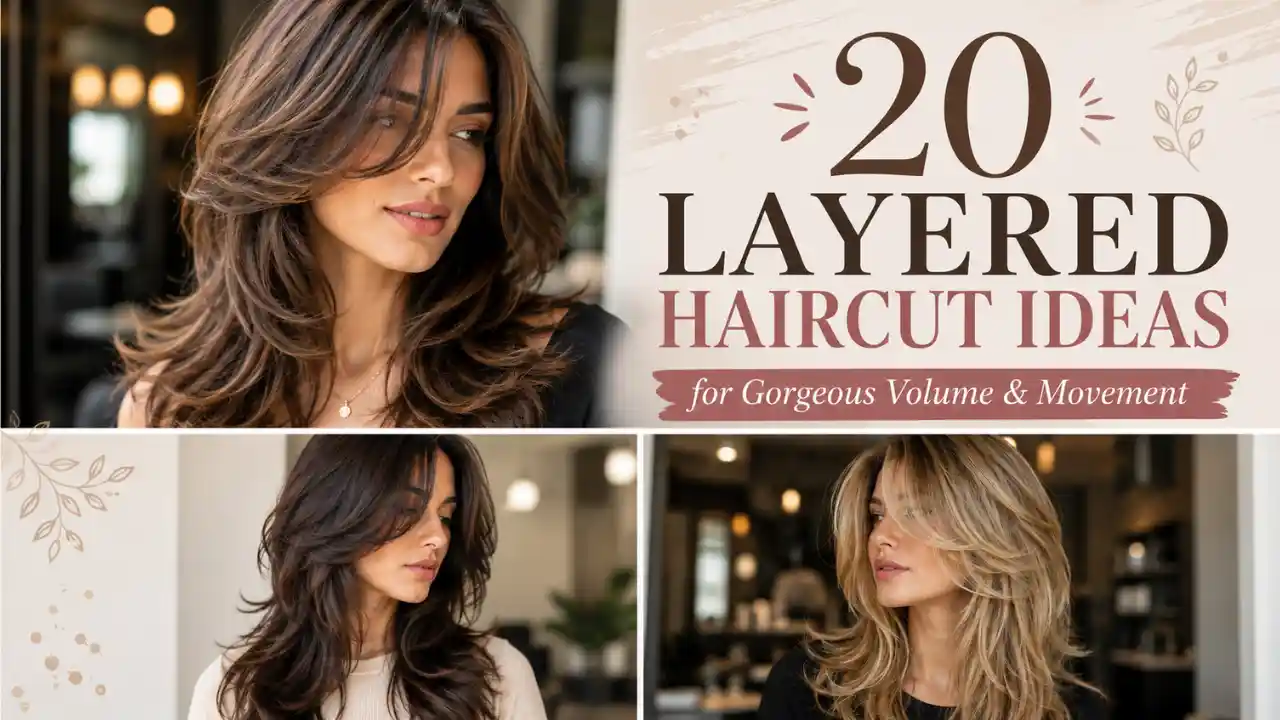
20 Layered Haircut Ideas for Gorgeous Volume & Movement
Flat hair can make even a beautiful hairstyle feel lifeless, heavy, or lacking shape. Layered Haircut Ideas by Styles Edit offer one of the easiest ways to introduce movement, dimension, and the appearance of fuller hair without completely changing your length. From soft face-framing layers and flowing butterfly cuts to bouncy blowout layers and textured styles, the right placement can completely change how your hair falls.
Modern layering is also becoming softer and more customized, with stylists focusing on natural movement rather than overly obvious steps. These ideas will help you find a layered look that gives your hair more body while still feeling polished, wearable, and current.
1. Butterfly Volume Layers
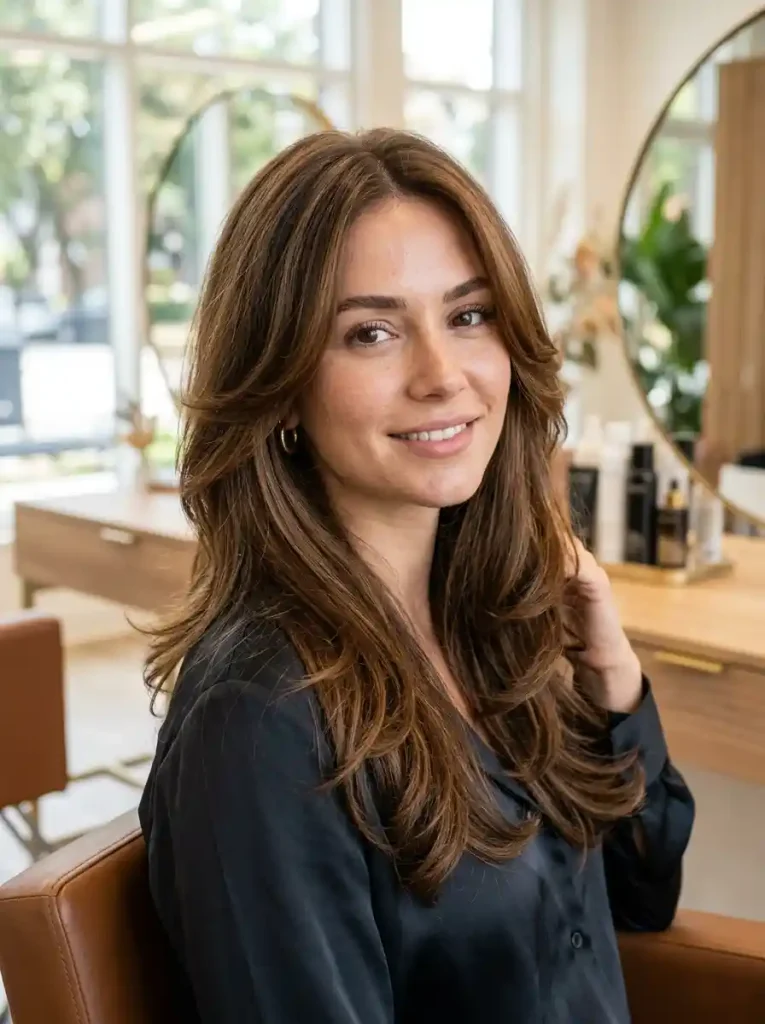
- Creates noticeable volume around the crown and sides without removing the overall length.
- Face-framing pieces give the haircut a lifted, airy appearance.
- Long lower layers maintain fullness while adding graceful movement.
- Works beautifully with round-brush blowouts, rollers, or loose waves.
- Particularly effective when long hair feels flat but you still want dramatic length.
- Gives the hair a polished, bouncy silhouette that photographs beautifully.
Butterfly layers are one of the strongest choices when the goal is maximum movement without sacrificing long hair. The haircut uses shorter layers around the face and crown before flowing into longer sections underneath, creating a soft separation between the upper and lower portions. That structure gives the roots and sides more visual lift while allowing the longest pieces to remain flowing and substantial. The result is especially flattering when styled with a rounded blowout because every layer catches movement differently. Current layered-hair trends continue to favor butterfly-inspired shapes because they provide volume while maintaining a soft, wearable finish.
Styling makes a major difference with this haircut, particularly if your natural hair tends to sit close to the head. Apply lightweight volumizing mousse near the roots, then use a large round brush to lift the upper sections while directing the face-framing pieces away from the face. Velcro rollers can create additional body without requiring excessive heat. If your hair is fine, ask your stylist to keep the lower layers relatively full so the ends do not appear sparse. I’ve found that the most flattering butterfly cuts have seamless transitions rather than extremely short, disconnected layers, allowing the entire hairstyle to move as one.
2. Long Face-Framing Layers
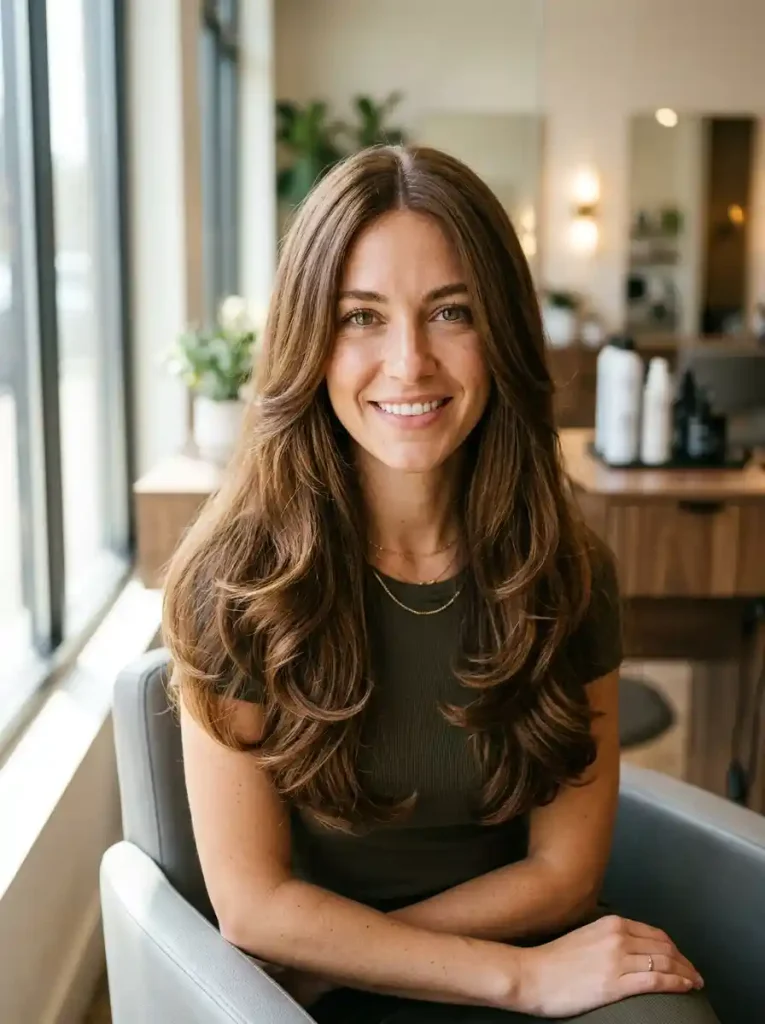
- Adds movement around the face while keeping most of the hair length intact.
- Creates the appearance of volume along the sides without excessive layering.
- Softens the transition between the front and longer back sections.
- Looks polished with both straight blowouts and loose waves.
- Can be customized according to face shape and natural hair texture.
- Makes long, heavy-looking hair feel more intentional and dimensional.
Long face-framing layers are a classic choice because they can transform the overall silhouette without requiring a dramatic haircut. The shortest pieces typically begin around the cheekbones, jaw, or chin and gradually connect with the longer lengths, creating movement around the face. This placement prevents long hair from hanging like one heavy curtain and instead gives it a more sculpted appearance. The technique works particularly well when the goal is subtle volume rather than a heavily layered look. It also offers flexibility because the front sections can be styled inward, swept away from the face, or allowed to fall naturally with the rest of the hair.
The starting point of the face-framing layers should be chosen carefully because even a small difference can change the final effect. Fine hair generally benefits from longer, conservative framing pieces that preserve density, while thicker hair can handle more pronounced movement. For styling, use a round brush to direct the front layers outward and slightly upward, then allow the remaining hair to follow naturally. A lightweight smoothing serum can enhance shine without flattening the roots. Many stylists emphasize tailoring layers to individual texture and lifestyle rather than copying a single trend exactly, which makes this style especially adaptable.
3. Soft Cascading Layers
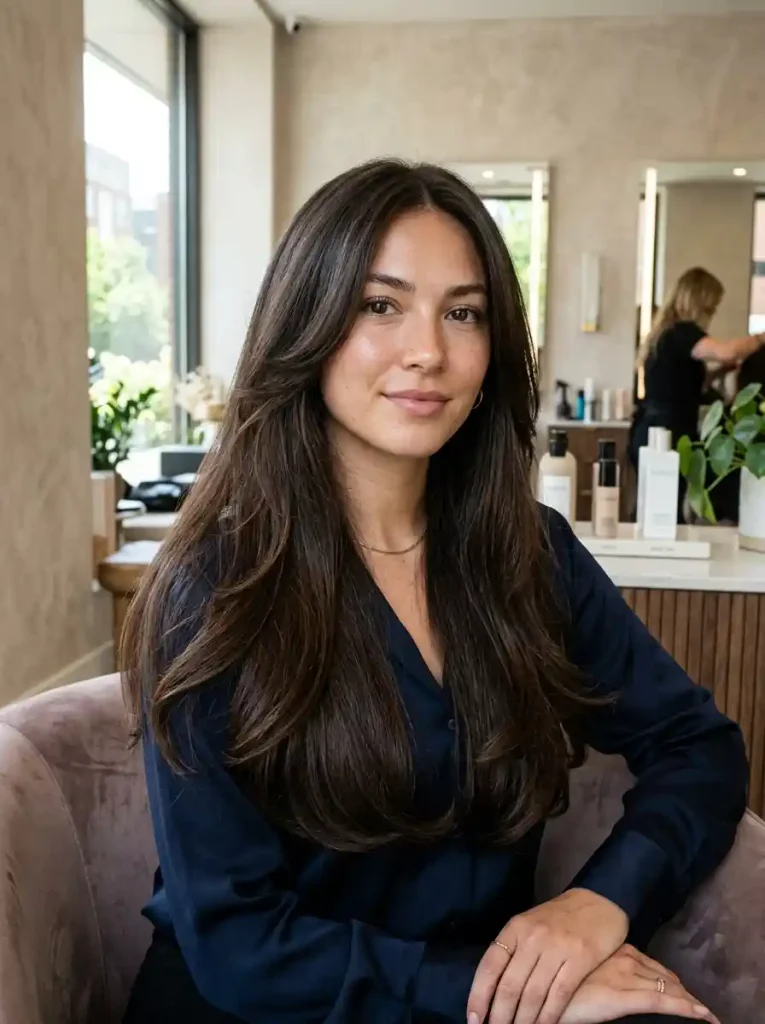
- Creates a continuous waterfall effect through the mid-lengths and ends.
- Adds movement without making the haircut appear choppy or overly textured.
- Keeps the bottom visually full and healthy-looking.
- Works beautifully on straight, wavy, and softly curled hair.
- Helps thick hair feel lighter while maintaining an elegant silhouette.
- Gives fine-to-medium hair more visible dimension when styled with volume.
Soft cascading layers are ideal when you want your hair to move beautifully without looking like the layers themselves are the main feature. Instead of creating dramatic steps, the lengths transition gradually from one section into another, producing a smooth waterfall effect. This approach is particularly attractive on long hair because the layers create visible movement while the ends remain substantial. Straight hair shows the graduated structure clearly, while waves and curls make the transitions appear even softer. It is also a practical option for people who want a noticeable refresh but prefer a haircut that can grow out naturally rather than requiring constant reshaping.
For the best result, ask your stylist to blend the layers carefully and maintain enough weight around the perimeter. A round-brush blowout can emphasize the cascading effect by giving each section a gentle curve, while a large curling iron can create relaxed waves for a more dimensional finish. If your hair is thick, strategic layering can remove excess weight and make styling easier without making the ends look thin. If your hair is fine, keep the lower layers longer and fuller. The goal is movement with density, rather than removing so much hair that the silhouette loses its strength.
4. Bouncy Blowout Layers
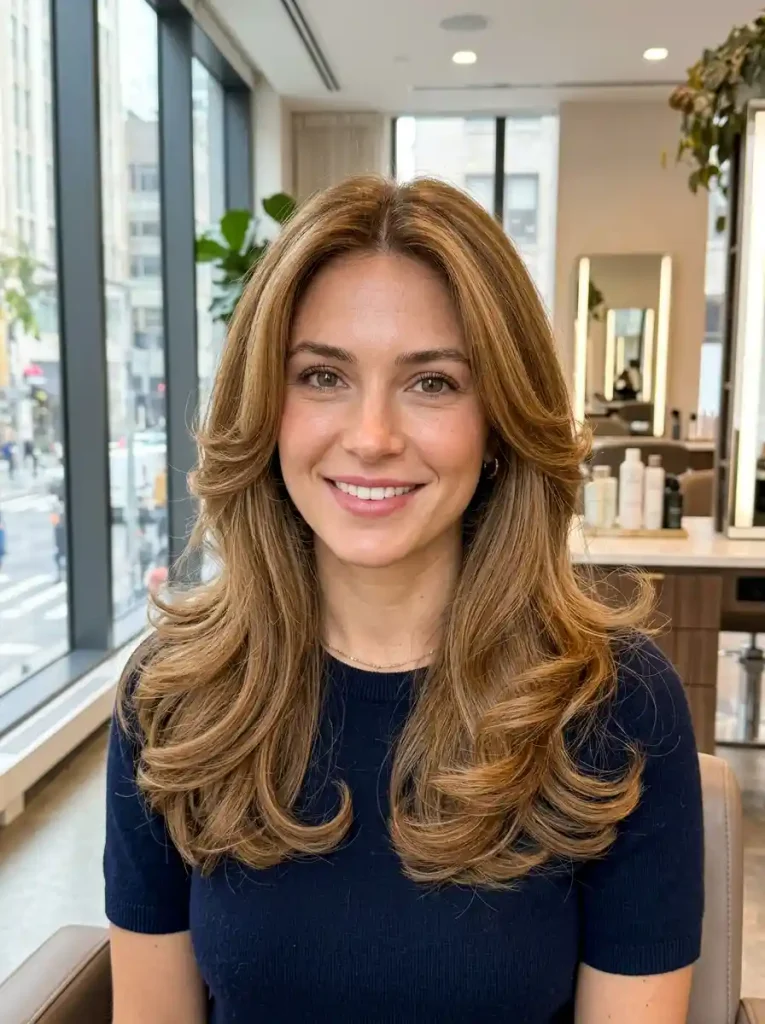
- Creates immediate body through the roots, sides, and layered ends.
- Gives straight or slightly flat hair a fuller appearance.
- Rounded styling emphasizes every layer without making them look harsh.
- Works beautifully for special occasions as well as everyday glamour.
- Adds a polished salon-quality finish to a simple layered haircut.
- Particularly effective on medium to long hair with enough length for movement.
Bouncy blowout layers combine the structure of a layered haircut with the fullness created by professional blowout styling. The layers provide the shape, while rounded brushing gives the hair lift, curve, and polished movement from the roots to the ends. This combination is especially useful when hair naturally falls flat because the haircut and styling technique work together instead of relying on volume products alone. The result feels glamorous but still wearable, with soft curves around the face and fuller-looking lengths. It is an excellent option when you want your haircut to look noticeably more expensive and professionally finished.
To recreate the effect at home, start with a volumizing mousse at the roots and a heat protectant through the lengths. Divide the hair into manageable sections and use a large round brush, lifting each section slightly before directing the ends backward or inward. Velcro rollers can help set the shape while the hair cools, which allows the volume to last longer. Avoid applying heavy oils before styling because they can reduce lift. I’ve found that the best bouncy layered blowouts remain soft and movable rather than stiff. Finish with a lightweight shine spray only after the hair has completely cooled.
5. Long Feathered Layers
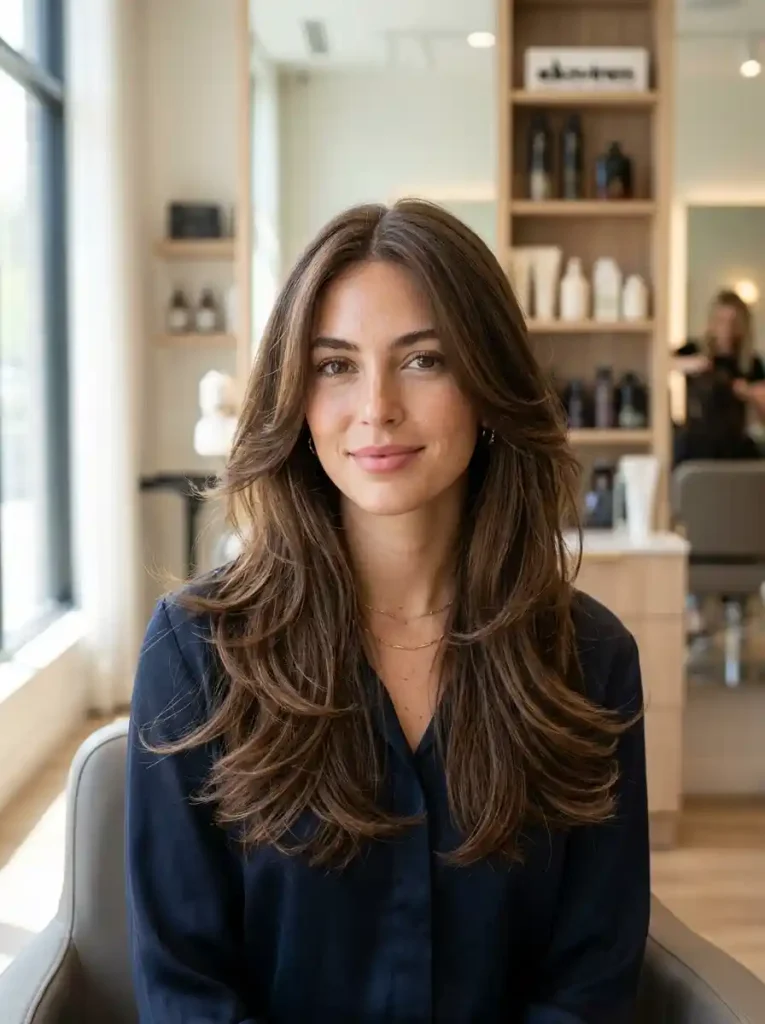
- Creates soft, airy movement throughout long hair.
- Feathered ends give the hairstyle a lightweight appearance.
- Face-framing layers add softness around the cheeks and jawline.
- Works beautifully with both blowouts and loose waves.
- Helps heavy hair feel more fluid without dramatically reducing length.
- Gives long hair a polished retro-inspired finish with a modern touch.
Long feathered layers are perfect when you want movement that feels soft rather than heavily textured. The ends curve away from the face and blend gradually into the longer lengths, creating an airy silhouette that moves naturally. Unlike extremely choppy layers, feathering keeps the overall haircut elegant and connected, making it particularly attractive for medium-thick and thick hair.
For styling, use a medium or large round brush to gently curve each section outward. A blow-dry brush can also create the feathered effect without requiring a complicated technique. Keep the ends hydrated with a lightweight leave-in conditioner so the layers look smooth rather than frizzy. If your hair is fine, avoid excessive feathering through the bottom because preserving density will make the haircut appear fuller.
6. Voluminous U-Shaped Layers
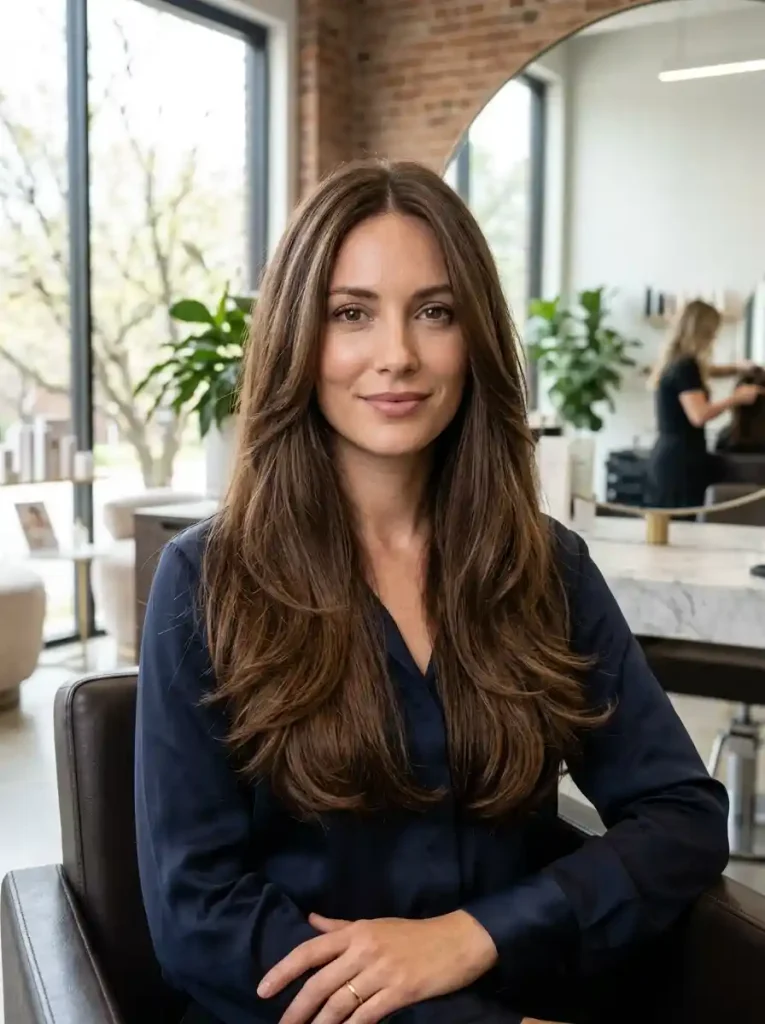
- Creates a naturally rounded and balanced silhouette.
- Maintains strong fullness through the longest lengths.
- Adds movement without making the ends appear thin.
- Works especially well for long, thick, or medium-density hair.
- Gives the back of the haircut a polished flowing shape.
- Looks beautiful with straight, wavy, or softly curled styling.
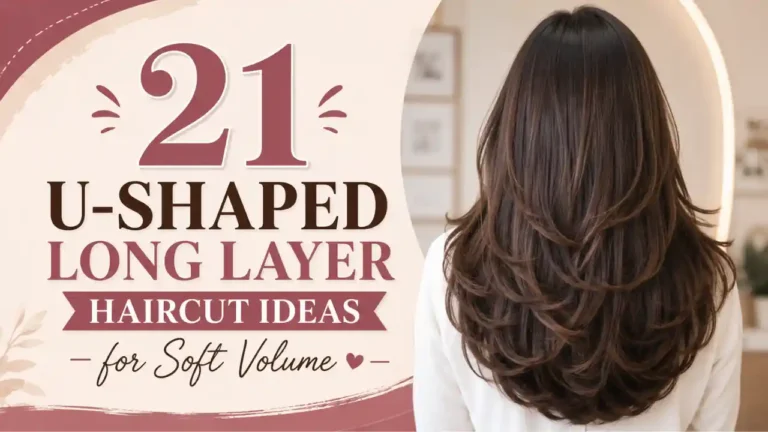
U-shaped layers are an excellent choice for anyone who wants movement while keeping the ends looking full. Instead of creating a straight horizontal perimeter, the longest hair forms a gentle U shape, with slightly shorter lengths toward the sides. Additional layers can then be placed throughout the interior to create movement while preserving the visual weight at the bottom.
This haircut is especially flattering when the hair is styled with loose waves because the rounded perimeter follows the natural movement of the waves. For straight hair, a large round brush can emphasize the smooth curve of the silhouette. If your hair is very thick, subtle internal layers can remove some weight without disturbing the strong U-shaped outline.
7. Butterfly Layers with Curtain Bangs
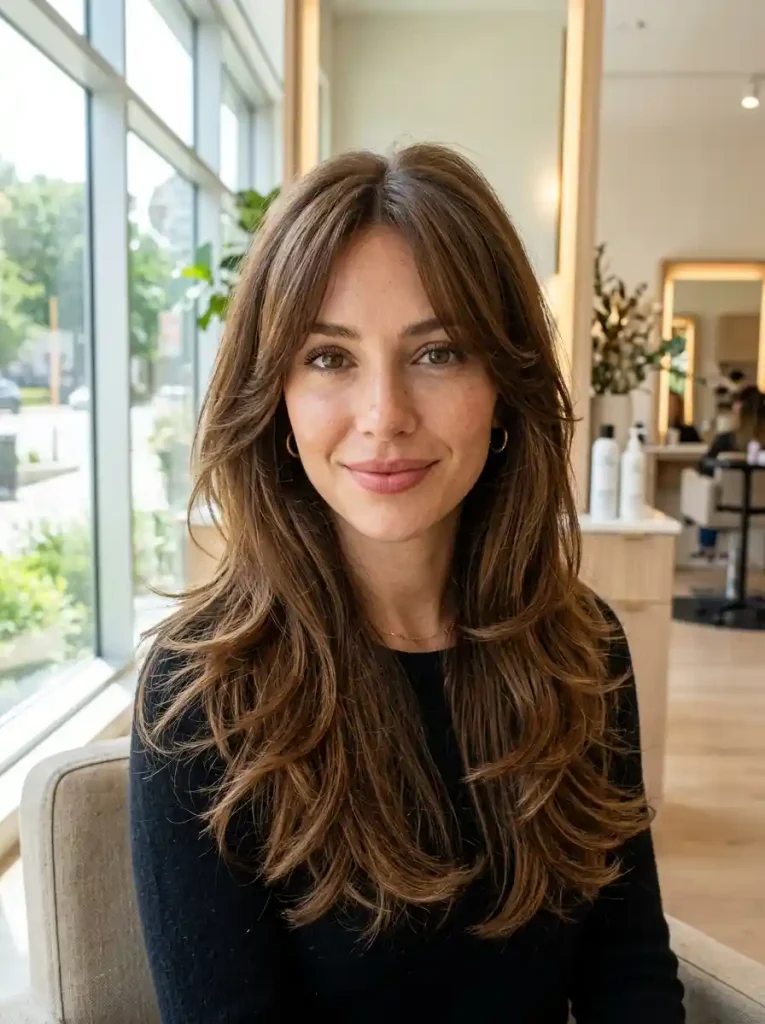
- Combines dramatic layered volume with soft curtain framing.
- Creates noticeable lift around the face and crown.
- Curtain bangs blend naturally into the surrounding layers.
- Works beautifully with large round-brush blowouts.
- Adds movement while keeping substantial length underneath.
- Creates a glamorous but wearable overall silhouette.
Adding curtain bangs to butterfly layers creates even more movement around the face. The bangs open softly from the center and gradually merge into the shorter butterfly layers, creating a continuous flow rather than a disconnected fringe. This makes the haircut especially attractive for anyone who wants more shape around the face without committing to a blunt bang.
For the best result, style the curtain bangs away from the face using a round brush or large rollers. Direct the roots slightly upward before allowing the ends to curve outward. The remaining layers can be given a soft blowout or loose wave to maintain the airy, voluminous appearance. Regular trims help preserve the connection between the bangs and face-framing layers.
8. Invisible Layers for Fine Hair
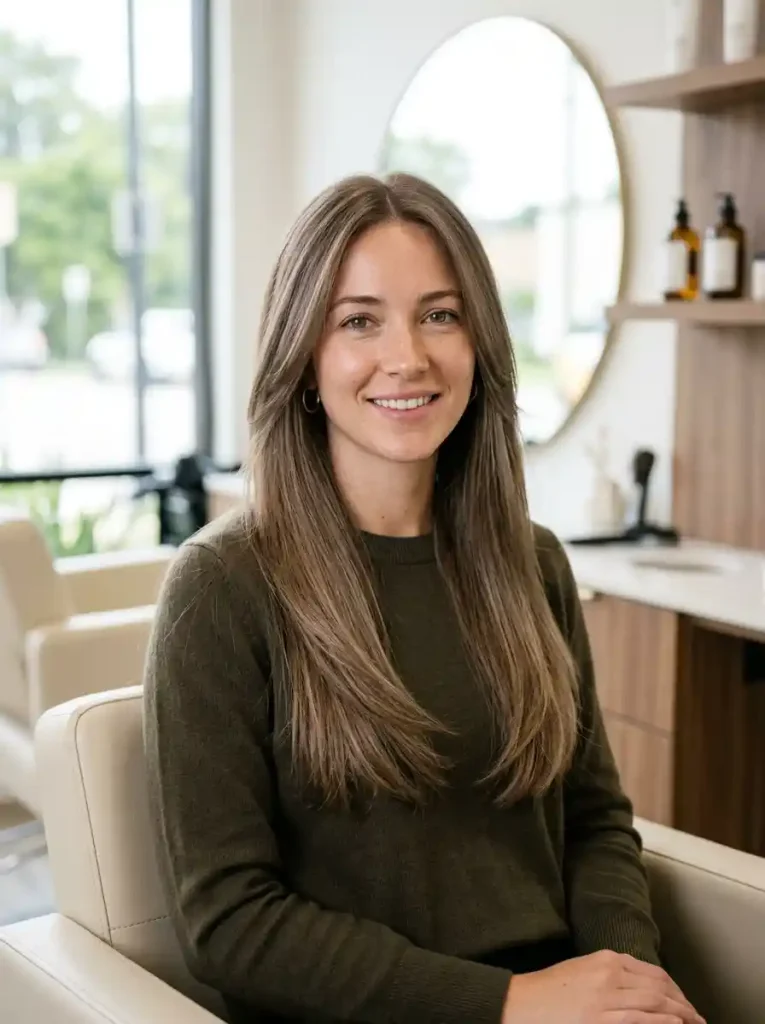
- Adds movement while preserving the appearance of density.
- Uses subtle internal layering rather than dramatic visible steps.
- Helps fine hair look fuller and more dimensional.
- Keeps the perimeter strong and healthy-looking.
- Works especially well with soft waves or polished blowouts.
- Creates a natural layered effect without making the haircut look heavily textured.
Invisible layers are particularly useful when fine hair needs movement without losing precious density. Rather than creating obvious short sections, the stylist subtly removes weight and adds internal movement while keeping the outer shape relatively solid. From the outside, the haircut can appear almost seamless, but the hair moves more freely when styled or brushed.
This technique works best when the stylist understands exactly where weight needs to be removed. Fine hair should generally retain a strong perimeter, especially toward the bottom. A volumizing mousse and lightweight root spray can enhance the effect without weighing down the hair. Soft bends created with a large curling iron can reveal the hidden layers beautifully.
9. Long Shaggy Layers
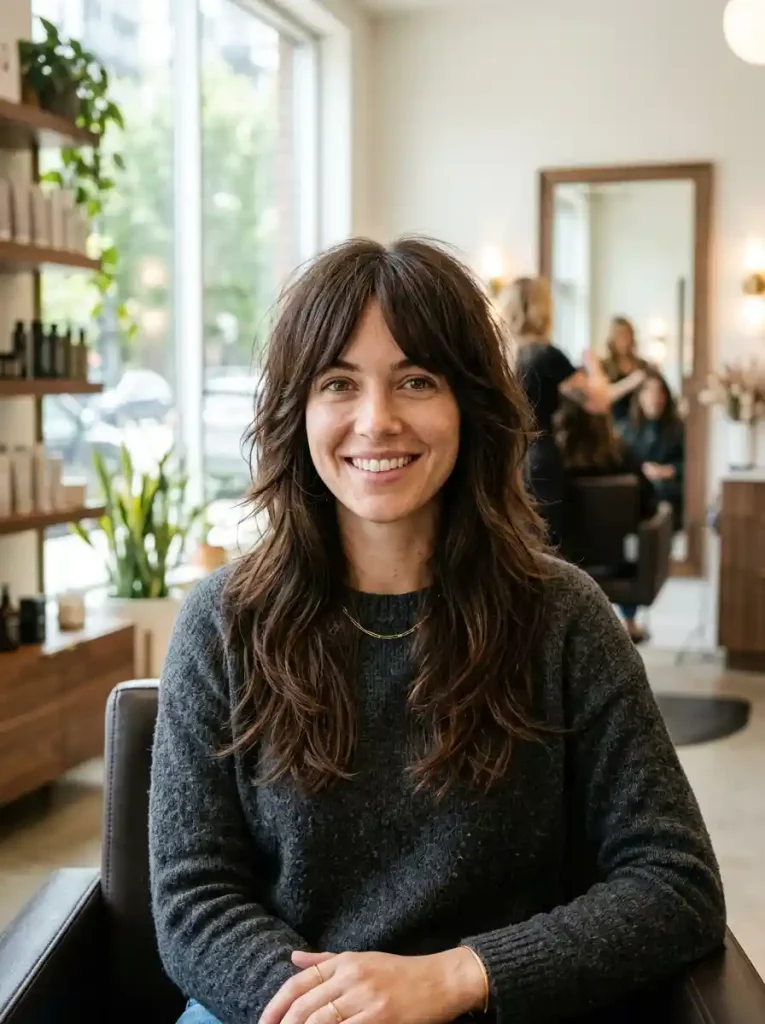
- Adds texture and movement for a more relaxed appearance.
- Creates volume around the crown and upper sections.
- Gives long hair a modern lived-in silhouette.
- Works beautifully with natural waves and texture.
- Makes thick hair feel lighter and more dynamic.
- Offers a more effortless alternative to polished layered cuts.
Long shaggy layers bring a relaxed, slightly undone personality to traditional long hair. The layers are more noticeable around the crown and sides, creating texture and separation rather than the smooth waterfall effect of classic cascading layers. This makes the style especially appealing if you prefer hair that looks naturally tousled rather than perfectly polished.
Natural texture works wonderfully with this haircut. Apply a lightweight texturizing spray to damp hair and allow it to air-dry, or use a diffuser for additional volume. For straight hair, loose bends can recreate the relaxed effect. Avoid over-brushing once the hair is styled because preserving separation between the layers helps maintain the effortless shaggy appearance.
10. Long Layers with Curtain Framing
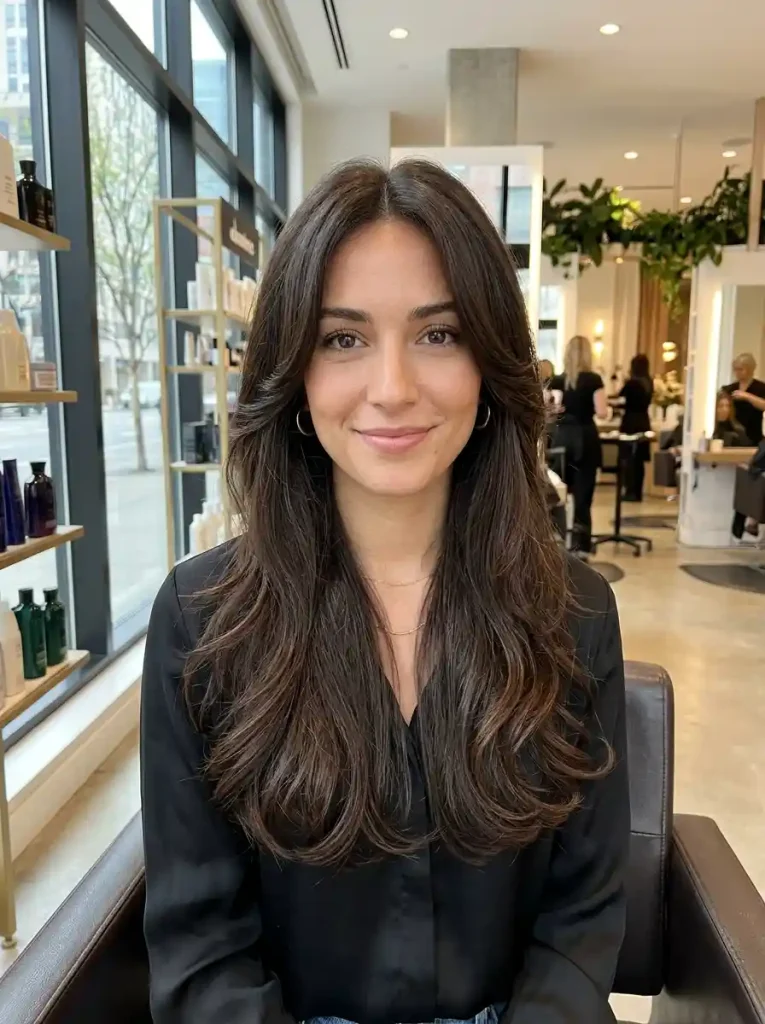
- Creates elegant movement around the face.
- Allows the longest hair to remain full and substantial.
- Curtain framing can visually elongate and soften facial features.
- Works beautifully with both straight and wavy styling.
- Provides a softer alternative to traditional bangs.
- Creates a timeless shape that can grow out naturally.
Long layers combined with curtain framing create a particularly balanced silhouette. The curtain pieces open around the face while gradually becoming longer toward the sides, connecting naturally with the rest of the haircut. This gives the front of the hairstyle movement without requiring a major reduction in overall length.
For maximum volume, blow-dry the curtain sections backward and away from the face. Let them cool in rollers before brushing them gently into place. If you prefer a more relaxed appearance, allow the pieces to follow their natural texture instead. The versatility of this combination makes it suitable for both polished and casual styling.
11. Face-Framing Butterfly Layers
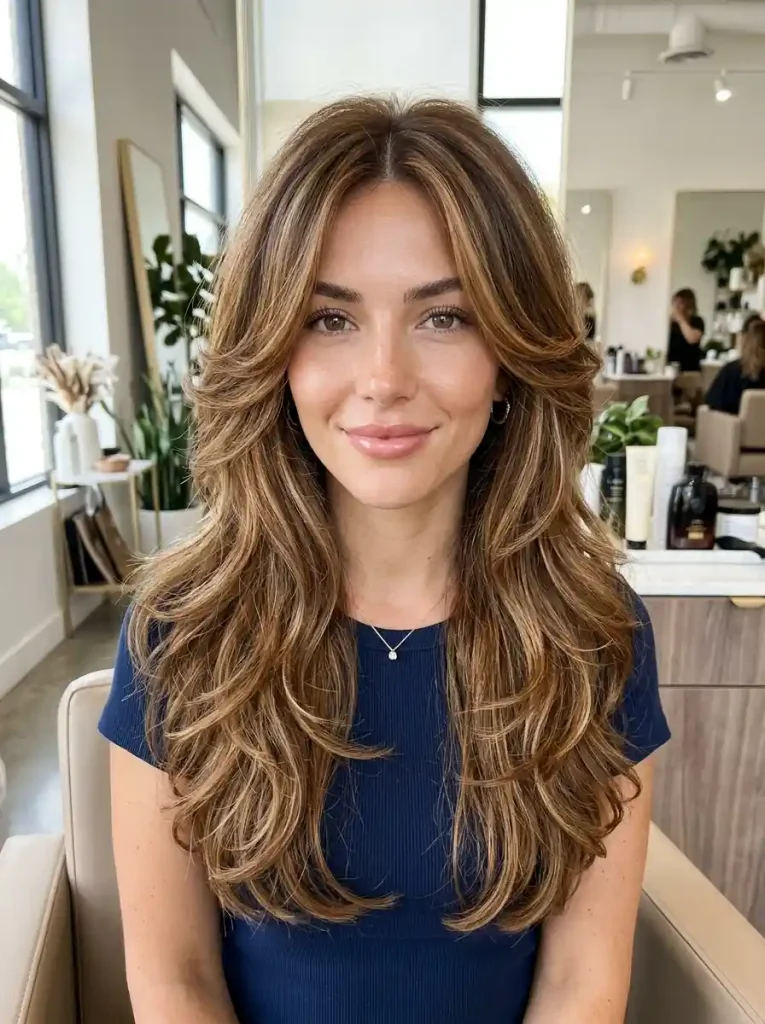
- Places the strongest movement around the face.
- Creates a lifted appearance without dramatically shortening the back.
- Helps frame the cheekbones and jawline beautifully.
- Works particularly well with voluminous blowout styling.
- Maintains impressive length through the lower sections.
- Creates a soft and glamorous layered silhouette.
Face-framing butterfly layers focus the movement where it has the greatest visual impact: around the face. Shorter upper sections blend into increasingly longer layers, creating a lifted appearance while allowing the back of the hair to remain long and flowing. This can make the hairstyle appear significantly more voluminous without requiring layers throughout every section.
A round brush is ideal for styling these pieces because it encourages the layers to curve away from the face. For extra lift, use rollers at the crown while the hair cools. A small amount of lightweight smoothing cream can control flyaways without eliminating the airy texture.
12. Mid-Length Choppy Layers
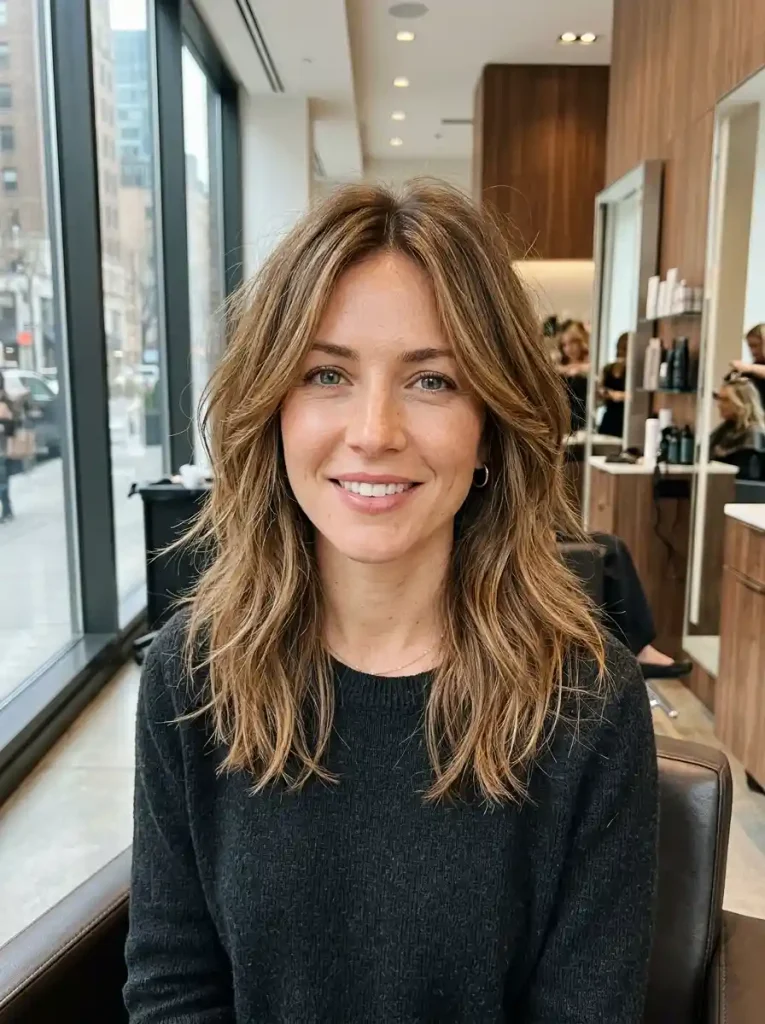
- Adds visible texture and movement to medium-length hair.
- Makes a simple haircut feel more dynamic and modern.
- Works beautifully with naturally wavy or textured hair.
- Creates a lighter appearance around the ends.
- Can add volume where the hair naturally falls flat.
- Provides an effortless alternative to highly polished layers.
Choppy layers are ideal when you want a haircut that feels modern, textured, and slightly effortless. Unlike seamless cascading layers, the sections have more visible separation, creating movement and personality throughout the hairstyle. This makes the style especially effective for medium-length hair that needs more shape.
The best results come from keeping the texture intentional rather than random. Use a lightweight texturizing spray and scrunch the hair while drying to emphasize natural movement. If your hair is straight, create a few loose bends with a curling iron and separate them gently with your fingers.
13. Long Layers with Wispy Ends
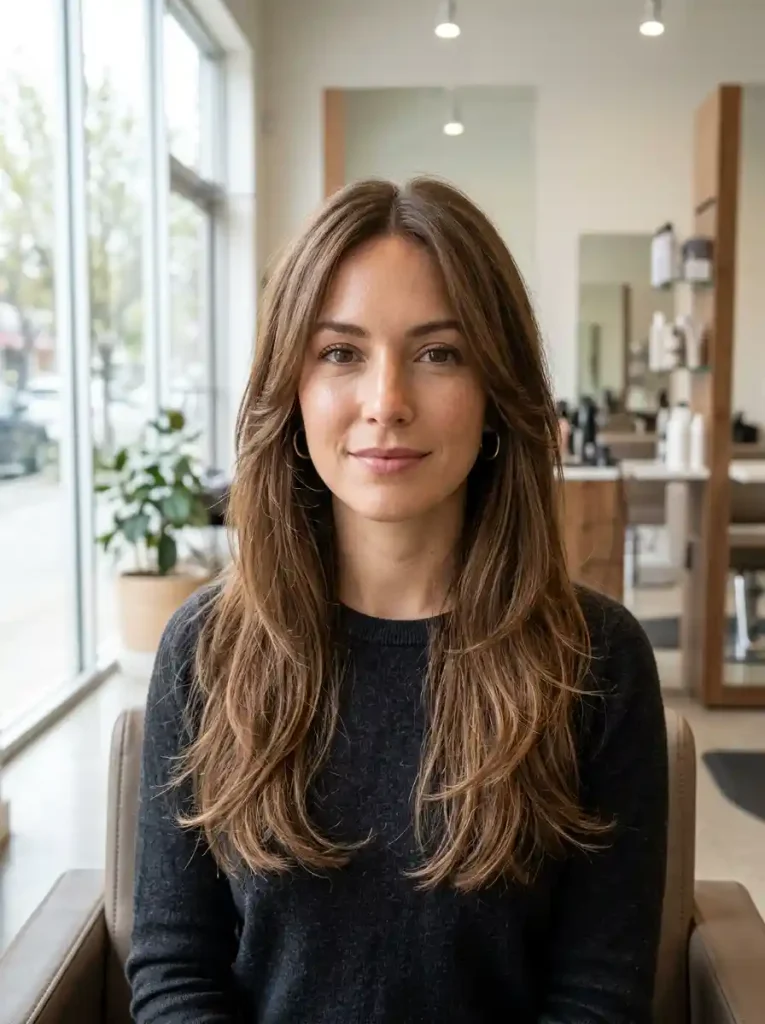
- Gives long hair a lighter, more delicate appearance.
- Creates movement without dramatic changes in length.
- Works beautifully with soft waves and loose curls.
- Adds an airy quality to thick or heavy hair.
- Makes the ends look fluid rather than bulky.
- Provides a romantic finish without excessive styling.
Wispy ends are a beautiful option when long hair feels too heavy but you still want to preserve its length. The layers gradually reduce visual weight toward the ends, allowing the hair to move more naturally. When paired with subtle face framing, the entire hairstyle can feel softer and more delicate.
Avoid making the ends excessively thin, especially if the hair is already fine. A skilled stylist can create a wispy appearance while preserving enough density for the perimeter to remain healthy-looking. Soft waves or a loose blowout will reveal the movement particularly well.
14. Rounded Long Layers
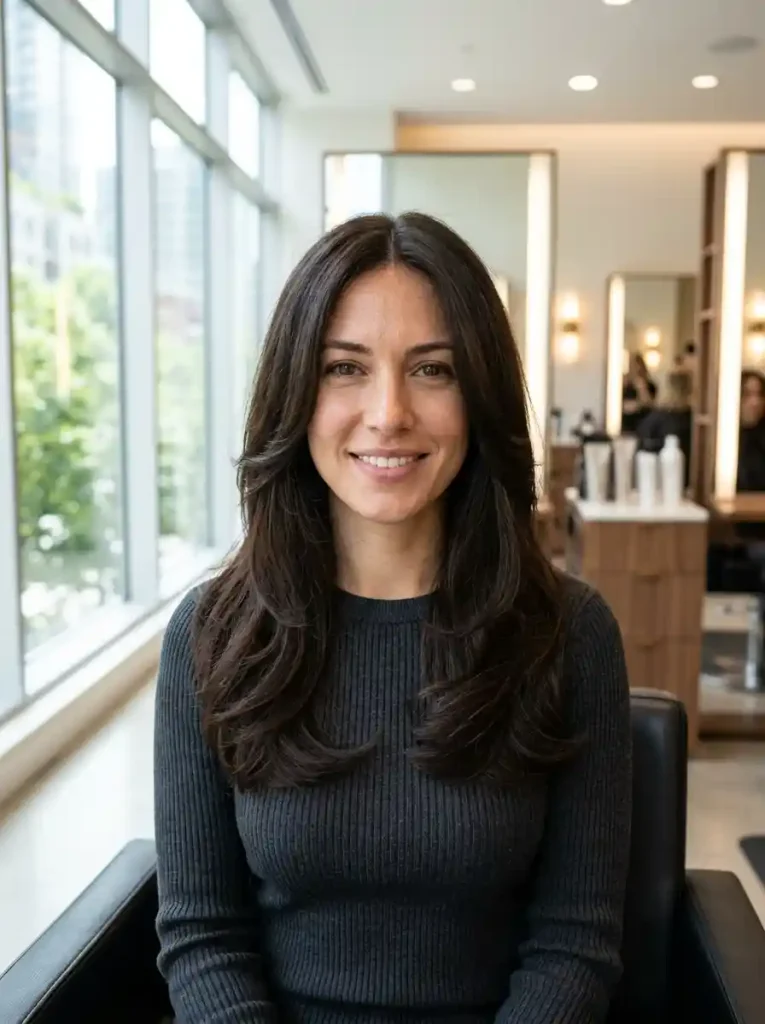
- Creates a soft rounded silhouette around long hair.
- Maintains fullness through the bottom.
- Adds movement without creating harsh layer lines.
- Looks polished when styled straight or with loose waves.
- Works especially well for thick and medium-density hair.
- Gives long hair a healthy, substantial appearance.
Rounded layers are ideal for creating a smooth silhouette with plenty of movement. Instead of allowing the ends to fall into a blunt horizontal line, the haircut creates a gentle curved shape that follows the natural flow of the hair. Interior layers then add movement without destroying the fullness of the perimeter.
A large round brush can emphasize the curved shape while giving the roots additional lift. For a more relaxed finish, create loose waves beginning below the cheekbones. Keeping the ends moisturized is important because rounded layers look best when the hair has a smooth, healthy finish.
15. Layered Hair with Soft Curtain Bangs
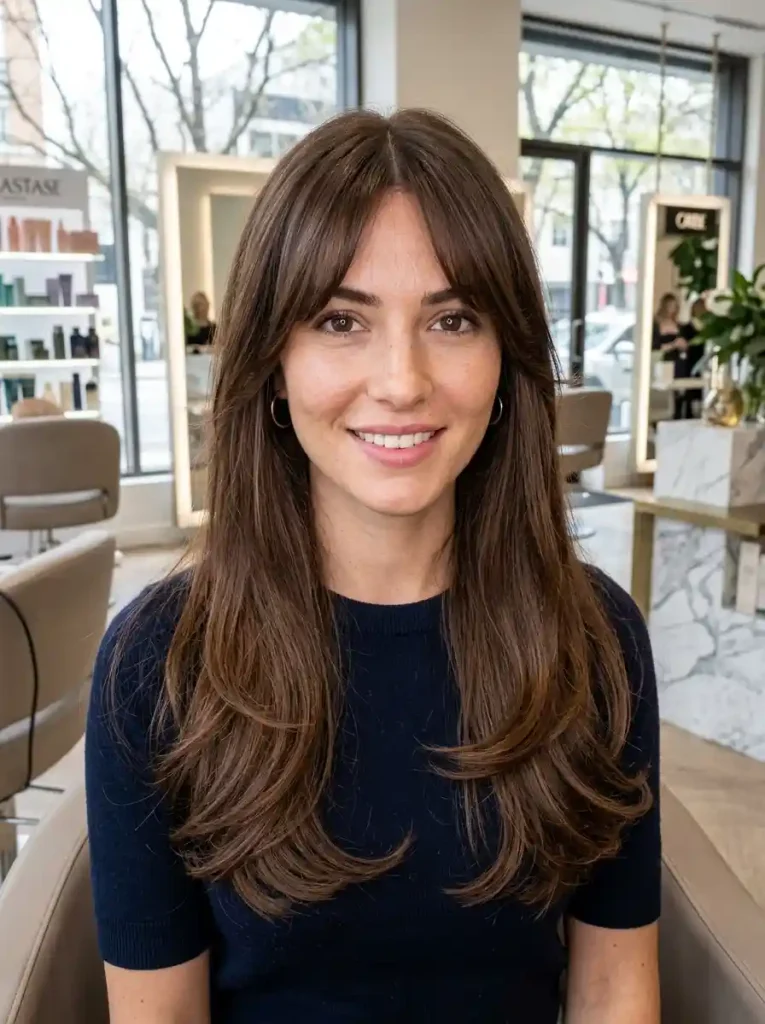
- Adds instant shape around the forehead and cheekbones.
- Curtain bangs blend naturally into long layers.
- Creates softness without the commitment of blunt bangs.
- Works beautifully with blowouts and loose waves.
- Gives long hair a more styled and intentional appearance.
- Can be customized to different face shapes and hair textures.
Soft curtain bangs are an excellent way to refresh long layered hair without removing much length. Their center-opening shape creates movement around the forehead and naturally transitions into face-framing layers. Because the ends are soft rather than blunt, they can grow out gracefully.
For styling, direct each side away from the face using a round brush. The goal is a soft curve rather than a rigid curl. A lightweight volumizing spray can help the bangs hold their shape, while a small amount of serum on the ends keeps them smooth.
16. Voluminous V-Cut Layers
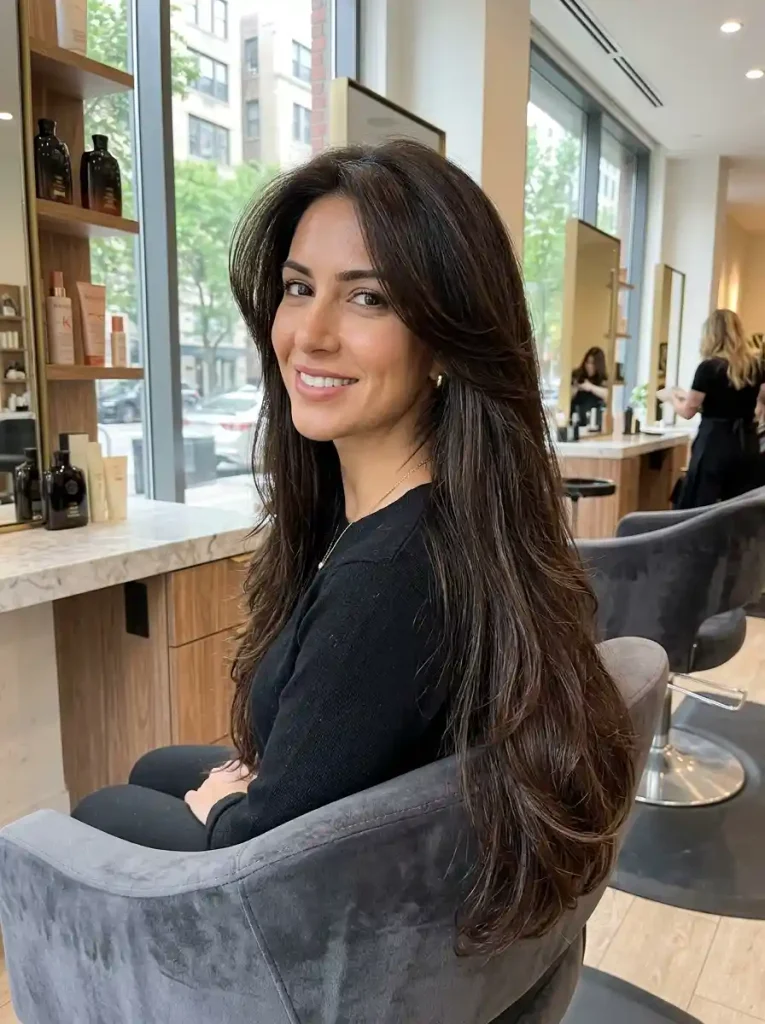
- Creates dramatic length and movement through the back.
- Produces a naturally tapered silhouette.
- Works especially well on thick and very long hair.
- Adds visual dimension without removing the longest center length.
- Looks striking with loose waves or a smooth blowout.
- Creates a more dramatic alternative to a U-shaped haircut.
A V-cut creates a noticeably tapered silhouette in which the center-back section remains longer than the sides. When combined with layers, it can create impressive movement and a dramatic flowing shape. This style is especially effective for very long hair where a simple blunt perimeter may feel too heavy.
The V shape should be balanced carefully with the amount of layering. Too much tapering can make fine hair look sparse, while thicker hair can generally support a stronger shape. Loose waves emphasize the difference in length beautifully and create a flowing, dimensional finish.
17. Soft Wolf-Inspired Layers
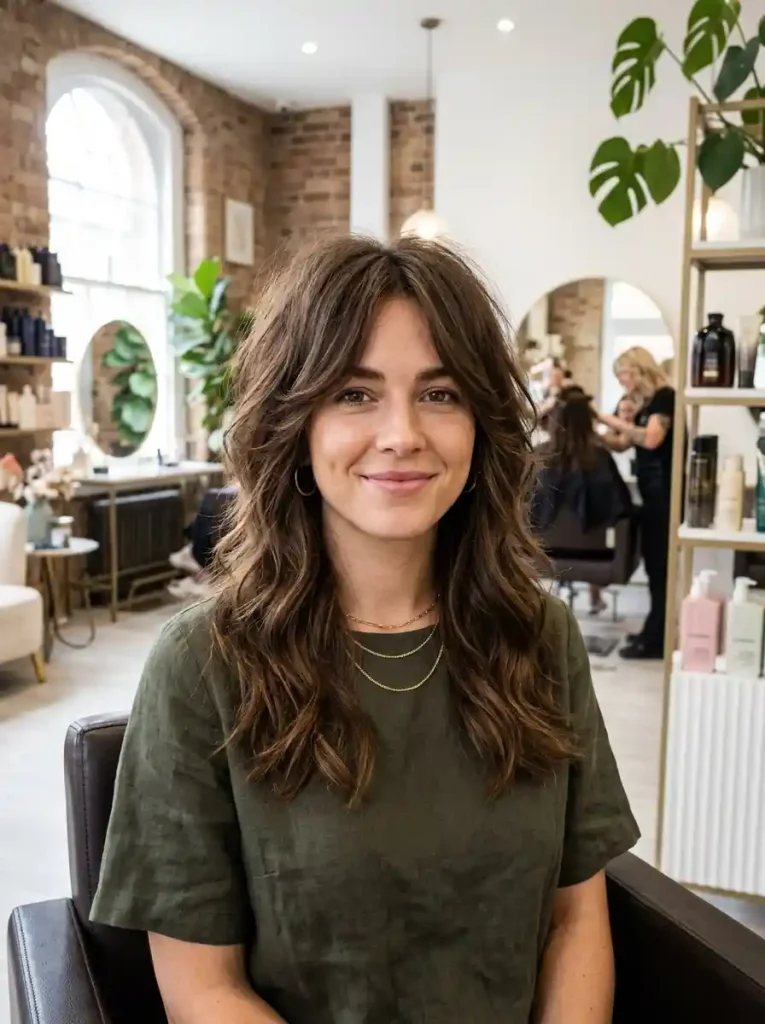
- Combines shag-inspired texture with a softer long-layered shape.
- Adds noticeable volume around the crown.
- Creates movement through the sides and ends.
- Works beautifully with naturally textured hair.
- Offers a modern alternative to traditional long layers.
- Can be styled messy or polished depending on preference.
Soft wolf-inspired layers provide more texture than a traditional layered haircut while remaining wearable. The crown receives additional movement, while longer sections keep the overall hairstyle substantial. This creates a balanced combination of volume, texture, and length.
The style works particularly well with natural waves because the texture helps the layers separate naturally. Use a lightweight mousse or texture cream and scrunch the hair while drying. If your hair is straight, soft bends can recreate the same lived-in appearance without making the style look overly messy.
18. Long Layers with Side-Swept Volume
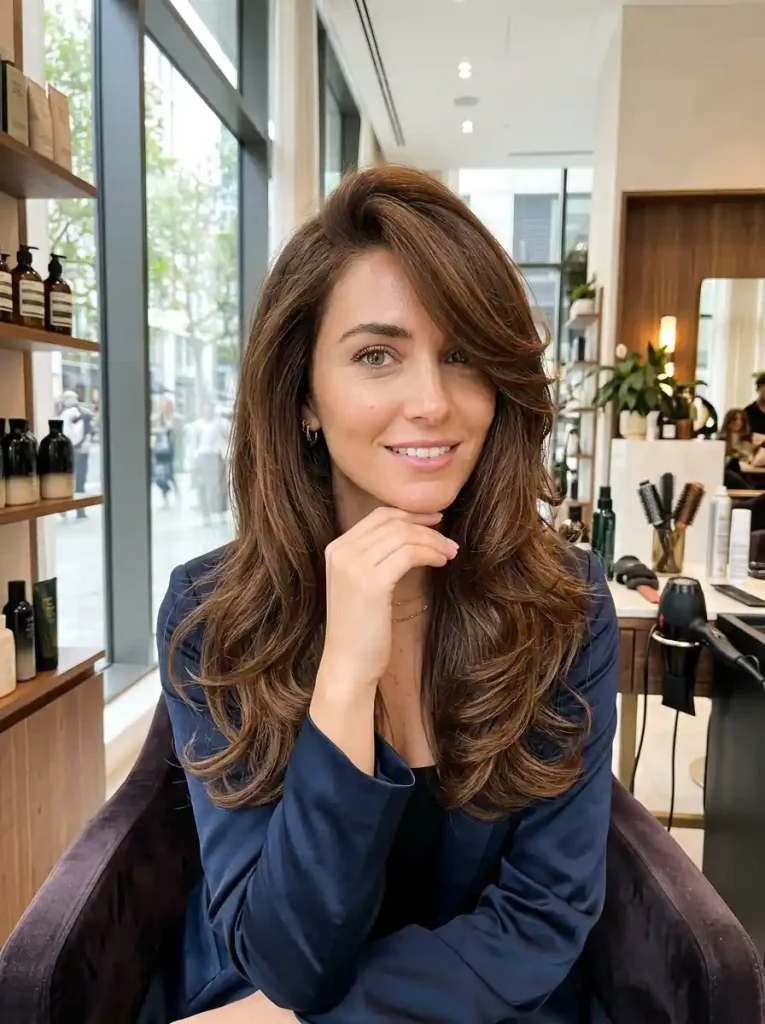
- Creates dramatic volume through the front and crown.
- Side-swept layers give long hair a glamorous appearance.
- Works beautifully for formal and evening styling.
- Adds movement without sacrificing overall length.
- Particularly flattering with large soft waves.
- Creates a polished, editorial-inspired silhouette.
Side-swept volume gives layered hair a glamorous finish by shifting the visual weight toward one side. The layers around the face are directed away from the part, creating lift and a cascading effect through the front. This can make even long hair feel more dynamic and styled.
For maximum volume, create the side part while the hair is damp and blow-dry the roots in the opposite direction before setting them into place. Large rollers can help create long-lasting movement. Finish with a flexible hairspray so the hair remains soft rather than stiff.
19. Soft Layered Curls
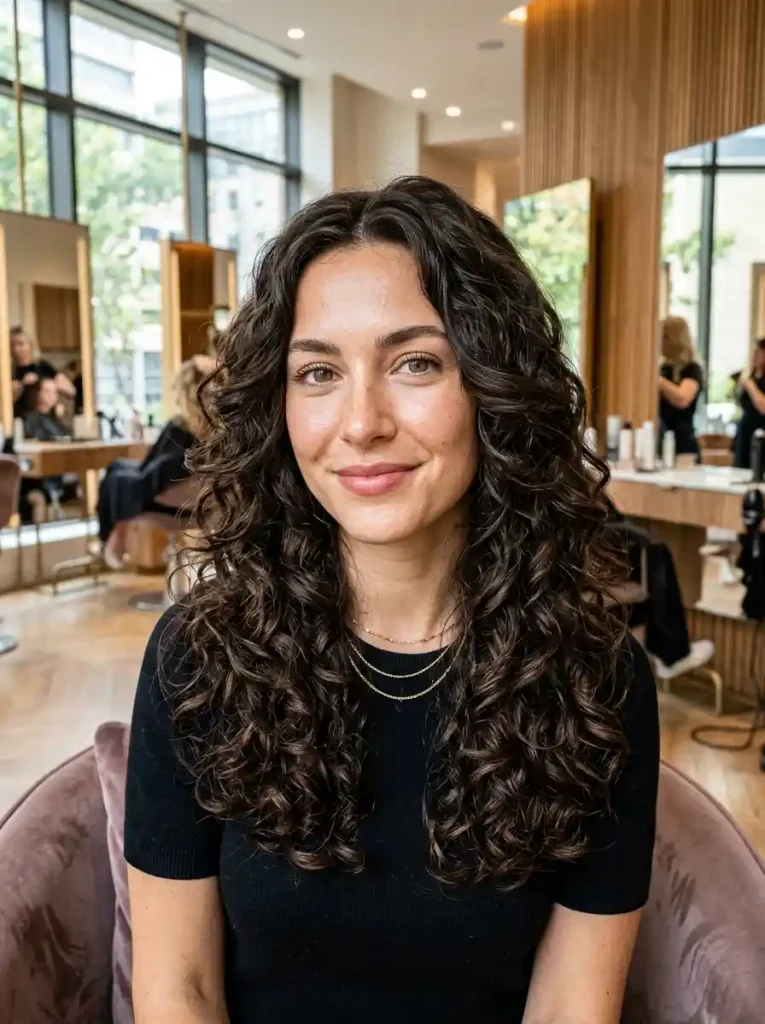
- Allows curls to form with more shape and definition.
- Reduces the heavy triangular effect in long curly hair.
- Creates balanced volume around the face and crown.
- Preserves enough length while improving movement.
- Works beautifully with natural curls and waves.
- Gives textured hair a polished, intentional silhouette.
Layering curly hair requires a different approach because curl patterns can shrink and expand depending on texture. Properly placed layers can help distribute volume throughout the haircut rather than allowing all the weight to collect toward the bottom. The result is a more rounded and balanced silhouette.
Curly hair generally benefits from lightweight hydration and styling products that encourage definition without creating excessive weight. Apply curl cream or mousse to soaking-wet hair, scrunch gently, and diffuse on low heat if needed. Avoid brushing the curls once dry because this can disrupt definition and create unnecessary frizz.
20. Glossy Long Layers with Maximum Movement
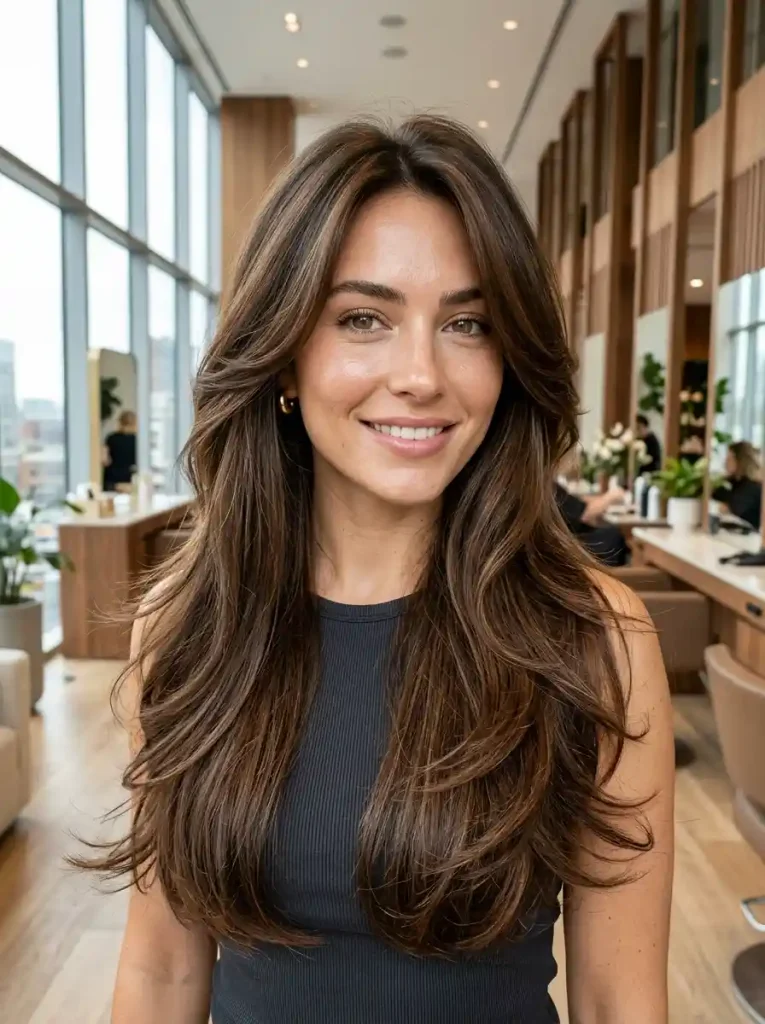
- Combines multiple layering techniques for maximum movement.
- Creates volume from the crown through the ends.
- Maintains impressive length and fullness.
- Works beautifully with a professional blowout or loose waves.
- Gives the hair a polished, expensive-looking finish.
- Ideal for anyone wanting a dramatic but wearable layered transformation.
This final layered style brings together the strongest elements of modern volume-focused haircuts: face framing, crown lift, seamless internal layers, and flowing ends. The key is blending every section so the movement feels continuous rather than disconnected. The result is long hair that looks fuller, lighter, and dramatically more dynamic while still maintaining its length.
Styling is what truly reveals the architecture of this haircut. A volumizing mousse at the roots, large round brush, and a few rollers through the crown can create impressive body. Add soft bends through the lengths and finish with a lightweight shine product. The most beautiful version should still feel touchable and natural, with layers that move freely rather than appearing stiff or overly styled.
Final Thoughts: Layered Haircut Ideas
The right Layered Haircut Ideas can completely transform long or medium-length hair by adding volume, movement, and dimension while preserving the overall shape you love. From dramatic butterfly layers and bouncy blowouts to subtle invisible layers, feathered ends, curtain framing, and soft textured cuts, there is a layered style for almost every hair type and styling preference.
The most important thing is choosing layers according to your hair density, natural texture, face shape, and desired maintenance level. Fine hair often benefits from subtle layering that preserves fullness, while thick hair can support more internal movement and texture. Whether you want glamorous volume or effortless everyday movement, a thoughtfully customized layered haircut can make your hair look fuller, healthier, and far more dynamic.